
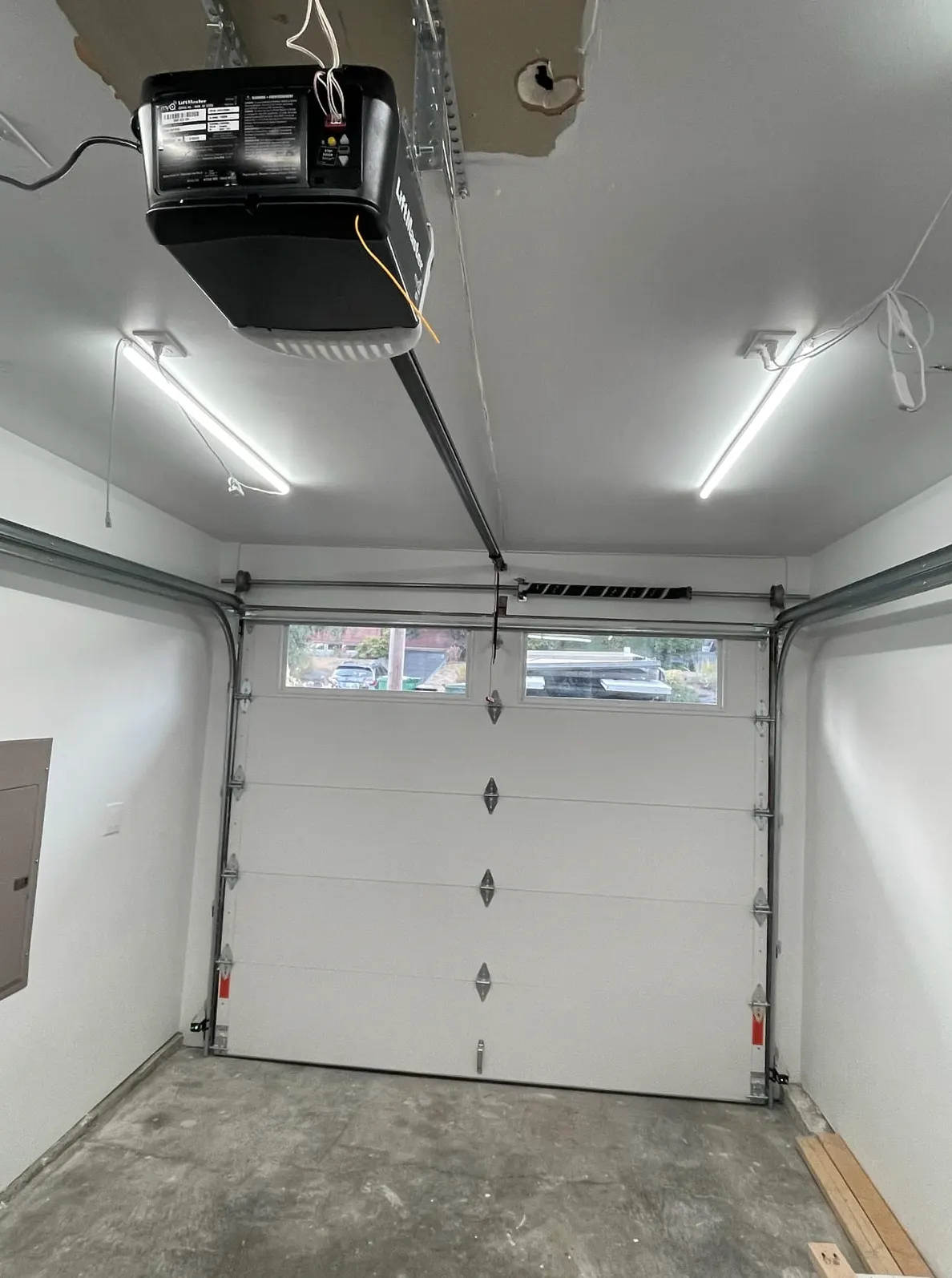
Rule of thumb: if the opener motor hums, clicks, or does nothing at all when you press the remote or the wall button, the problem is almost never the motor itself. It's usually something upstream of it — power, a sensor, or a signal — and most of those fixes take ten minutes, not a new opener.
The exceptions: if the door moves a few inches and reverses, that's a safety sensor or force-setting issue, not a "won't respond" problem — that's a different repair. And if the chain or belt has snapped or the trolley has disconnected from the carriage, you'll hear the motor run while the door sits still; that's mechanical, not electrical, and it's the one case on this list where you do need a technician before you try anything else.
What You're Actually Seeing
Before troubleshooting, it helps to narrow down which version of "ignoring" you've got, because each points to a different cause:
- Total silence — no light, no hum, no click from the motor unit when you press either the remote or the wall button.
- Wall button works, remote doesn't — the opener clearly has power and the logic board is functioning.
- Remote works, wall button doesn't — less common, but it happens, especially in garages where the wiring runs along an exterior wall.
- Both are dead, but the opener's light still comes on — power is reaching the unit, so the fault is further down the chain.
Hold onto which one of these matches your situation — it'll save time once you start checking causes.
The Causes, in the Order a Technician Checks Them
1. Power to the Unit
This sounds obvious, but it's the single most common call-out. Check that the opener is actually plugged in — garages double as storage, and cords get knocked loose by a bike, a ladder, or a bin sliding off a shelf. Next, check the breaker. Afternoon storms that roll through from June into fall can trip a breaker without anyone noticing, especially on an older panel. If the outlet is on a GFCI circuit (common in garages built or rewired to current code), press the reset button on the outlet itself. The fix here is just restoring power — no parts needed.
2. The Manual Disconnect (Pull Cord)
If the opener has power but the door won't engage with the trolley, check whether the red emergency release cord has been pulled, even partially. Kids, a stored ladder brushing against it, or a recent power outage where someone manually opened the door can all leave it disengaged. Reconnecting it is a quick pull or push on the trolley release, and the door should re-engage with the next full open-close cycle.
3. Wall Button Wiring
If the remote works but the wall button doesn't, the low-voltage wire running from the button to the opener unit is the next suspect. These wires run along walls and through moisture-prone areas, and over time humidity can corrode the connection points or a staple can nick the insulation. A technician checks for a loose connection at both ends and tests continuity along the run; the fix is usually re-stripping and reconnecting the wire, not replacing the whole button.
4. Remote Batteries and Programming
If the wall button works but the remote doesn't, batteries are the first check — garage remotes sit in hot cars or stay clipped to a visor through plenty of 90-degree days, which shortens battery life faster than people expect. If fresh batteries don't solve it, the remote may have lost its programming, which can happen after a power outage resets the opener's memory. Reprogramming takes a few minutes by following the learn-button sequence on the motor unit.
5. Antenna Position and Interference
The opener's antenna — a short wire hanging from the motor unit — needs to hang down, not get tucked up against the housing. It's easy to accidentally push it out of the way during other garage work. Interference from LED shop lights or a nearby transmitter can also weaken the signal. The fix is repositioning the antenna or swapping out a noisy light fixture.
6. Safety Sensor Alignment
The photo-eye sensors near the bottom of the tracks have to be aligned and unobstructed, or the opener's logic board will refuse to respond to any command at all — not just reverse mid-close. Humidity and condensation can fog the lenses, and a sensor can get knocked out of alignment by something leaned against the track. Check for a steady indicator light on both sensors; a blinking light means misalignment. Straightening the bracket and wiping the lenses usually resolves it.
7. The Circuit Board
If every item above checks out and the opener still won't respond to either control, the logic board itself may have failed. Power surges from storm season are a common cause, even with no visible lightning strike nearby. A failed board usually means replacing the opener's internal control unit or the opener itself, depending on age and availability of parts.
When to Call Sebring Garage Door
If you've checked power, the pull cord, and the sensors and the opener still won't respond, it's worth having it looked at rather than guessing further — especially if the issue traces back to wiring or a board, where a wrong diagnosis means paying twice. Our Garage Door Opener Installation technicians carry replacement boards and wiring for most major opener brands, and if the unit is old enough that parts aren't worth sourcing, we'll walk you through installation options rather than just upselling the first one. We also offer Garage Door Maintenance & Tune-Up visits that catch loose wiring and sensor drift before they turn into a dead opener on a Friday night.
If your opener in Sebring, Avon Park, Lake Placid, or anywhere else in Highlands County has stopped listening to the remote or the wall button, call Sebring Garage Door and we'll find out exactly which link in the chain broke.